What are PFAS and why do they represent a risk?
Per- and poly-fluoroalkyl substances (PFAS) constitute a vast family of thousands of synthetic chemicals characterized by a completely (per) or partially (poly) fluorinated carbon chain. This structure gives them extraordinary properties, such as water and oil repellency and thermal resistance, making them ideal for surface treatments of paper and cardboard since the 1950s. However, they are known as “forever chemicals” due to their extreme stability, which makes them resistant to degradation and capable of accumulating in the environment and in organisms.
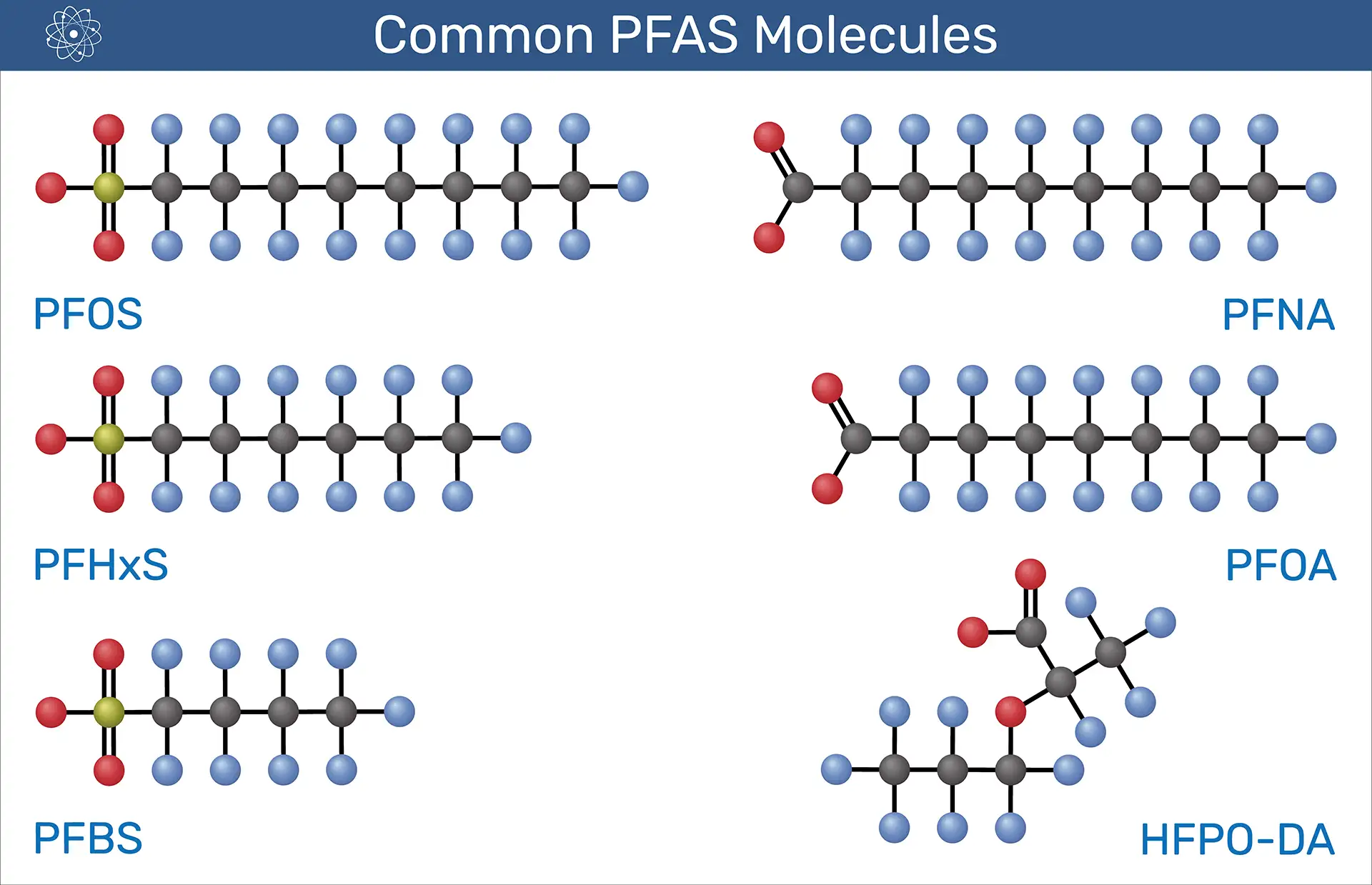
Scientific concern is supported by precise evidence: in 2023, the IARC (International Agency for Research on Cancer) elevated the hazard level of PFOA to “certainly carcinogenic to humans” (Group 1), while EFSA (European Food Safety Authority) in 2020 established a very restrictive tolerable weekly intake (TWI) for the sum of four key PFAS (PFOA, PFOS, PFNA, PFHxS), noting that the exposure of part of the European population already exceeds these limits (4.4 ng/kg of body weight per week).
ECHA’s Universal Restriction Proposal (UPR)
The ECHA (European Chemicals Agency) Background Document clarifies the scope of the REACH restriction proposal, officially presented in January 2023 by the authorities of five Member States: Germany, the Netherlands, Denmark, Norway, and Sweden. The goal is to restrict approximately 10,000 PFAS substances, preventing their release throughout the entire product life cycle.
Given the ubiquitous nature of these substances, the global restriction affects a very wide range of industrial sectors:
- Textiles and Clothing: Technical fabrics and water-repellent treatments.
- Electronics and Semiconductors: Critical components for hardware and infrastructure.
- Transport (Automotive and Aerospace): Seals, cables, and hydraulic fluids.
- Energy: Solar panels and hydrogen technologies.
- Consumer Products: Non-stick cookware, cosmetics, and firefighting foams.
- FCM (Food Contact Materials): Barrier treatments for paper and cardboard, plastics, rubbers.
It is important to emphasize that REACH is already intervening with concrete measures on specific subclasses. An example is Regulation (EU) 2024/2462 which limits the use of perfluorohexanoic acid (PFHxA), its salts and related substances (Entry 79 – Annex XVII). From October 10, 2026, the ban on placing on the market will take effect for various applications, including paper and cardboard in contact with food.
The regulatory precedent: Denmark and the Netherlands
It is essential to highlight that for cellulosic FCMs, the restriction path has already begun at the national level. Denmark, a pioneer in this field, introduced a ban on the use of PFAS in paper and cardboard materials in contact with food as early as July 2020. Similarly, the Netherlands implemented specific restrictions in 2022 limiting the use of these substances in paper and cardboard.
Restrictions of Regulation (EU) 2025/40 (PPWR)
While the REACH process continues, the packaging sector already has its limits defined in the new Regulation (EU) 2025/40 (PPWR). Article 5, Paragraph 5, stipulates that starting from August 12, 2026, food contact packaging cannot be placed on the market if it exceeds the following concentration limit values:
- 25 ppb (µg/kg) for individual PFAS measured by targeted analysis.
- 250 ppb (µg/kg) for the sum of measured PFAS.
- 50 ppm (mg/kg) for total PFAS content, including polymeric ones.
The 50 ppm limit serves as a critical threshold for screening. If the total fluorine content exceeds 50 mg/kg, the manufacturer or importer must provide documentary evidence (or second-level analysis) demonstrating whether this value is attributable to PFAS or non-PFAS substances.

Compliance Strategy and Supply Chain Management
Compliance is no longer just a matter of laboratory testing, but of rigorous technical-regulatory management:
- Supplier Audits: Identify intentional addition and the presence of precursors or processing aids (PPA – Polymer Processing Aids).
- Documentary Update: The technical file (Annex VII of the PPWR) must be integrated with objective evidence of compliance.
- Unintentional Contamination: Particular attention should be paid to cellulosic materials and Recommendation (EU) 2019/794 on the risks of migration from cross-contamination or recycled paper.
Conclusions
The transition to “PFAS-free” materials represents a structural change for the entire supply chain. The technical complexity of these substances and their widespread presence necessitate an accurate mapping of materials and constant dialogue with raw material suppliers.
Anticipating the analysis of one’s packaging against the requirements of August 12, 2026, is not only an act of legal compliance but a necessary step to ensure product safety and transparency toward the consumer. In a constantly evolving regulatory context, the correct interpretation of technical data and the constant updating of technical files remain the pillars for effective and conscious risk management.